Lost Lands 8
- 4.5
- Rating
- 1.00M
- Installs
- Free
- Price
 Analysis by App-foxy
Some adventure games grab me with a complicated opening, while Lost Lands 8 takes a quieter route: it places Susan in a world damaged by a mysterious curse and lets the unease build through exploration, observation, and problem solving. My first impression was that this is designed for players who enjoy examining a scene carefully rather than rushing from one action sequence to the next. The story gives the journey an emotional reason to continue, but the atmosphere does most of the early work.
Developed by FIVE-BN GAMES, this free adventure game is a good fit for a relaxed evening, a commute, or a short session when I want something more thoughtful than an arcade game. It is available for Android devices running at least version 7.1, and the current version is 1.0.7.1597.1894. The game is rated for Everyone 10+, which matches its mysterious fantasy tone better than a harsh or frightening presentation would.
The opening also makes the central conflict easy to understand. Susan’s family life has been disrupted by the curse, so the adventure is not just a tour through attractive locations. There is a personal stake behind the investigation. I found that useful because it gives the slower sections a purpose: searching a room, studying an object, or working through a puzzle feels connected to the attempt to repair something that has been broken.
You May Also Like

 Blood Strike: 2.5 Anniversary
Blood Strike’s Loadouts Turn Every Drop Into a Tactical Gamble
A close look at Blood Strike’s custom loadouts: how fast access to signature weapons reshapes its battle royale rhythm, rewards preparation, and narrows the gap between fights.

 Pandora - Music & Podcasts
Pandora’s Music Is Easy to Start, but Harder to Recover
Pandora’s strength is its low-effort path from a seed to a station. Its weak spot is how much confidence it asks you to place in connection, setup, and quiet recovery.

 8 Ball Pool
 Is Built on Rivalries, Rematches, and Routine
A close look at the rivalries, rematches, shared routines, and unanswered safety questions that turn a quick pool match into a persistent mobile community.

 Samsung Music
’s Quiet Strength Is Playing What You Already Own
Its reach comes less from spectacle than from dependable access to a personal library. That simplicity is both the app’s strongest retention engine and its ceiling.

 AccuWeather: Weather Radar
AccuWeather Review: A Quick, Clear Forecast for Everyday Decisions
For everyday plans, the best forecast is the one you can understand quickly. AccuWeather makes rain timing, radar, and local conditions easy to act on, with a few trade-offs.

 Hill Climb Racing
Why Hill Climb Racing Still Turns Crashes Into One More Run
A tiny car, a bumpy hill and one more upgrade: Hill Climb Racing keeps resurfacing because its simple chaos makes every near-miss feel personal.
More From Our News Desk



A world built from visual clues
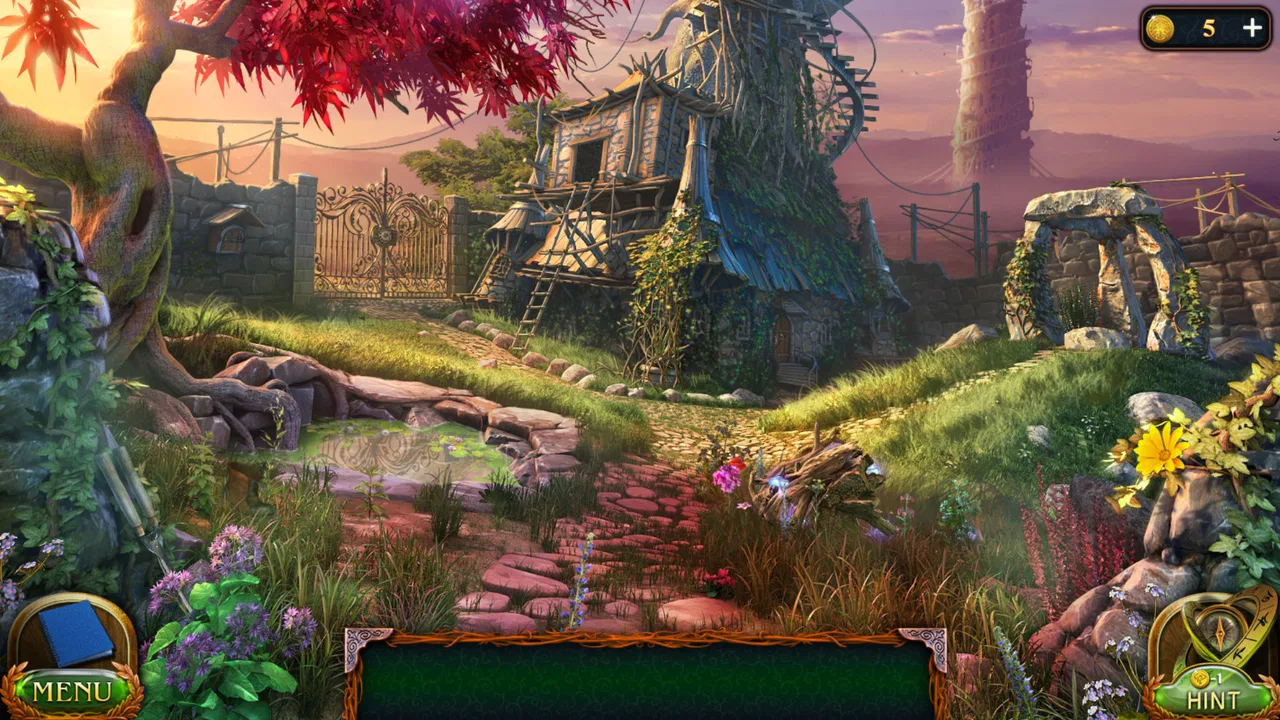
The strongest part of the presentation is the way the setting communicates through details. Instead of relying only on dialogue to explain what happened, the game uses damaged spaces, unusual objects, and carefully arranged environments to suggest the history of the Lost Lands. I enjoyed looking at each location as a small visual puzzle. The scene is not merely a background for a button press; it often hints at where attention should go next.
That art direction gives the adventure a coherent identity. The fantasy setting feels mysterious without needing constant spectacle, and the visual language supports the story’s sense of disruption. A familiar domestic concern sits beside a much larger supernatural problem, creating a useful contrast. Susan’s motivation remains human even when the places around her become strange.
I also appreciated that the environments encourage patience. In many mobile adventures, the temptation is to tap everywhere until the correct response appears. Here, I had a better experience when I paused to read the composition of a scene first. An object placed apart from the rest, an unusual shape, or a repeated visual motif can be more informative than random tapping. My most useful tip is to treat every location as a sentence: look for what the scene is trying to emphasize before touching anything.
This approach will not suit everyone. Players who prefer bright, fast-moving exploration may find the visual pacing restrained. The game asks me to spend time with a location, and that can feel slow if I am playing while distracted. It is better suited to a screen where I can see small details clearly, especially when I am trying to distinguish an interactive object from ordinary decoration.
Why the setting feels connected
The setting works because its visual elements support the same emotional direction. The environments are not presented as unrelated stages with a fantasy skin placed over them. The curse, Susan’s family situation, and the strange places she visits all contribute to a mood of uncertainty. That consistency matters more to me than visual extravagance. I would rather explore a world with a clear artistic personality than move through technically busy scenes that do not reinforce the story.
There is also a practical benefit to this design. When the scenery has a recognizable language, I can remember locations more easily. I start to associate certain shapes, colors, or arrangements with investigation rather than seeing every screen as a blank collection of objects. That makes backtracking less tiring, even when I need to reconsider something I previously overlooked.
For players who use an adventure game as a way to relax, this is one of the better reasons to try it. The world invites observation instead of demanding constant speed. I would not describe the experience as empty or passive; it is simply more deliberate. The satisfaction comes from noticing a relationship between clues and understanding why a location matters.
Sound that supports the pauses
The sound design contributes to the same mood as the artwork. Rather than pushing the player forward with an aggressive soundtrack, it helps the locations feel isolated, mysterious, or emotionally unsettled. That restraint is important because the game’s puzzles need room to breathe. If the audio were too loud or urgent, the slower investigation would feel artificial.
I tend to play this kind of game with the sound enabled, because the atmosphere loses some of its shape when everything is silent. The audio does not replace the visual clues, but it gives each pause more weight. A quiet moment while I examine an object feels intentional instead of like a loading gap between major events.
The rhythm is especially noticeable when the story moves between exploration and puzzle solving. The game does not treat every interaction as a dramatic climax. Instead, it allows a scene to settle, lets me inspect it, and then gives the next discovery room to register. That pacing can be calming, although it also means that impatient players may feel they are waiting for the game to catch up with them.
My practical advice is to play in a setting where the atmosphere can work: headphones during a quiet evening, or a moderate volume when playing alone at home. I would not call sound essential for understanding the basic progress of the adventure, but it improves the sense of place. If I were playing only for rapid puzzle completion, I might mute it; if I wanted the complete mood, I would keep it on.
A rhythm for focused sessions
The game’s pacing makes it well suited to focused sessions rather than constant multitasking. I can imagine playing after dinner, stopping when I reach a natural pause, and returning later without feeling that I have abandoned a reflex-based challenge. That is a real advantage for mobile play, where interruptions are common.
At the same time, the slower rhythm makes attention important. If I open the game while watching a video or answering messages, I am more likely to miss a visual connection and then blame the puzzle for being unclear. The better workflow is simple: play one scene with full attention, inspect objects in a logical order, and only use assistance after I have genuinely tested the obvious possibilities.
This is also where the game differs from many casual alternatives. A quick match-three title can absorb a few spare minutes without asking me to remember much. Lost Lands 8 asks for continuity. Even when a session is short, I get more from it if I remember the story situation and the clues already encountered.
Puzzles that match the mood
The mechanics fit the artistic direction because they make observation useful. Exploration, item handling, and puzzle solving work together to turn the setting into something playable. I am not simply reading about a cursed world; I am examining it, testing connections, and deciding what deserves another look.
I found the best moments came when a solution felt prepared by the environment. A good puzzle in this style should make me think, “I saw that earlier, but I did not understand its importance yet.” Lost Lands 8 is most satisfying when it creates that kind of delayed recognition. The visual design plants the question, and the interaction gives me a way to answer it.
A helpful habit is to keep a mental or written note of unusual objects rather than assuming every clue must be solved immediately. If a symbol or item seems important but has no obvious use, I move on and remember it. This avoids wasting time repeatedly tapping the same area. It also respects the game’s intended rhythm, where progress can depend on information gathered in a different location.
Another useful trade-off is deciding when to use help. Assistance can protect the experience from becoming frustrating, but using it too early can flatten the pleasure of discovery. I prefer to inspect the whole scene, try the most natural combinations, and then seek guidance only when I have reached a genuine dead end. That approach keeps the challenge intact without turning one stubborn step into an evening-long obstacle.
The mechanics are not aimed at players who want complex combat, competitive rankings, or fast physical control. This is an adventure game first. If your ideal mobile game is built around quick reactions or repeated short rounds, the usual arcade or action alternative will probably serve you better. Lost Lands 8 is for players who enjoy connecting clues and allowing a story to unfold at a measured pace.
Where the free model fits
The game is free to download, which makes it easy to try before deciding whether its style suits you. Optional purchases range from $0.99 to $19.99 per item. I see that model as most reasonable when it remains a choice rather than a requirement for basic enjoyment. For my own play style, I would begin without spending anything, learn how the puzzles are structured, and only consider a purchase if I wanted to reduce friction after giving the game a fair chance.
That choice matters because puzzle difficulty is personal. One player may enjoy working through every clue, while another may prefer a smoother story experience and become impatient after getting stuck. The free entry point lets both types test the balance. I would not recommend spending immediately just because a single section slows me down; sometimes stepping away and returning later is enough to reveal the solution.
There is also a difference between value and length for this kind of game. A player who wants endless replayability may find a story-driven adventure less appealing than a game built around procedural rounds or multiplayer competition. The value here comes from the journey, the setting, and the satisfaction of solving its challenges, not from an infinite activity loop.
Who will enjoy the journey
I would recommend Lost Lands 8 to players who like atmospheric fantasy, visual investigation, and puzzles that reward careful attention. It is particularly suitable for someone who wants a mobile game that feels closer to an interactive mystery than a reflex challenge. The personal thread involving Susan’s family also gives the exploration more emotional direction than a sequence of disconnected riddles.
It is a good choice for an evening routine. Imagine having half an hour after a busy day, putting the phone on silent, and exploring one location without trying to rush. The game can fill that space well because it provides a clear objective while leaving enough room for calm observation. It also works for players who prefer playing alone and setting their own pace.
I would be more cautious about recommending it to someone who dislikes hidden-object-style attention, backtracking, or puzzles with indirect solutions. The game expects patience. It may also frustrate players who want every interaction to produce an immediate result. A more direct action-adventure game would be a better match if you want movement, combat, or constant dramatic feedback.
The age rating of Everyone 10+ makes the tone accessible to a broad audience, but accessibility does not mean the game is effortless. Younger players may still need help with some of the reasoning, while adults who are unfamiliar with this genre may need time to understand its visual conventions. I would describe it as approachable in presentation, with challenges that depend more on attention than on speed.
How it compares with familiar alternatives
Compared with a standard casual puzzle game, this adventure offers a stronger sense of place and a more continuous reason to keep going. A match-three game is easier to pick up for a few seconds, but it usually does not ask me to remember a story clue or inspect a location as a whole. Lost Lands 8 gives those details more importance, so the reward is slower but more personal.
Compared with a large action-adventure title, it is far less demanding to control. I do not need fast reflexes or a complicated button layout. The trade-off is that the experience is narrower: the pleasure comes from discovery and atmosphere rather than freedom of movement or combat variety.
Its closest competition is likely another narrative puzzle adventure. In that group, the deciding factor is mood. I would choose this one when I want a supernatural setting with a family-centered motivation and a measured pace. I would choose a different title if I wanted humor, competitive features, or a more experimental story structure.
My atmosphere verdict
After spending time with it, I see Lost Lands 8 as a carefully paced adventure whose art, sound, setting, and mechanics are pulling in the same direction. The curse gives the story urgency, the environments provide visual questions, and the puzzles turn those questions into actions. Nothing about the design asks me to play faster than the atmosphere can support.
Its main limitation is also part of its identity. The deliberate pace can feel too quiet for players who want immediate excitement, and the need to inspect scenes carefully may become tiring when I am distracted. The optional purchases are another reason to approach it thoughtfully: I would first test the free experience and decide based on my own tolerance for solving or seeking assistance.
The game has reached over a million installs, with an average rating of 4.5 from around thirty-five thousand ratings and about a thousand written reviews. Those figures suggest that its particular style has found a substantial audience, but they do not change the central question: do you enjoy slow-burn exploration and puzzle solving?
For me, the answer is yes when I want a focused, atmospheric session rather than a quick distraction. I like that the world communicates through more than exposition, and I appreciate that the mechanics make careful looking worthwhile. If you want a calm fantasy investigation with a coherent mood and enough challenge to reward patience, this is a free adventure worth trying. If you need speed, competition, or constant action, I would point you toward a different kind of game instead.
FAQs for Lost Lands 8
01What is Lost Lands 8 about?
Lost Lands 8 is a story-driven hidden-object adventure game that combines exploration, puzzle solving, and fantasy storytelling. You follow Susan as she investigates a new threat affecting the Lost Lands, visiting mysterious locations, collecting useful items, and solving environmental challenges. The game is designed for players who enjoy atmospheric adventures with a strong narrative rather than fast-paced action.
02How does the gameplay in Lost Lands 8 work?
The main gameplay loop involves exploring scenes, finding hidden objects, interacting with characters, and combining items to progress through the story. You will also encounter logic puzzles, mini-games, and tasks that require careful observation. Some solutions are not immediately obvious, so paying attention to dialogue and examining every area is important, especially if you prefer completing the adventure without frequently using hints.
03Is Lost Lands 8 suitable for beginners?
Yes, Lost Lands 8 is generally accessible to beginners, particularly for players familiar with hidden-object or point-and-click adventure games. The interface is straightforward, and the game provides guidance through objectives and interactive locations. However, a few puzzles may require patience and experimentation. Players who are new to the series can still understand the story, although previous games may provide additional background about the characters and world.
04Does Lost Lands 8 require an internet connection or include in-app purchases?
The game is primarily designed as a single-player adventure, so the main experience does not depend on multiplayer features. Depending on the platform version and how it is distributed, an internet connection may be needed for the initial download, updates, advertisements, or optional purchases. Before installing, check the official store listing for current details about offline play, trial limitations, premium chapters, and any in-app purchase requirements.
05How long does it take to complete Lost Lands 8?
Completion time depends on how quickly you solve puzzles, whether you use hints, and if you explore optional content. A typical playthrough can take several hours, while players who search for every collectible and complete bonus material may spend considerably longer. The game is best enjoyed slowly, since rushing through locations can cause you to miss clues, interactive objects, and details that enrich the story.
Pros
- Atmospheric environments make exploration feel immersive.
- Puzzles are varied enough to keep the adventure engaging.
- The story offers plenty of lore for series fans.
- Helpful hints reduce frustration during difficult sections.
- Works well for players who prefer a relaxed pace.
Cons
- Some puzzles rely on trial and error rather than clear clues.
- The opening can feel slow before the main mystery develops.
- A few item interactions are easy to overlook.
- The full experience may require an in-app purchase.
- Long dialogue sections may not appeal to action-focused players.

Lost Lands 8
Gallery